
From Ancient Craft to Modern Innovation
Introduction:
One of the earliest textile technologies ever discovered by humans, spinning has played a vital role in the advancement of civilization. This complex process has been essential to turning raw fibers into yarn, the essential component of textiles, from the early days of hand spinning to the present era of automated spinning mills. We go into the art and science of spinning in this thorough examination, following its historical origins, comprehending its methods, and investigating its modern advancements.
Historical Evolution of Spinning:
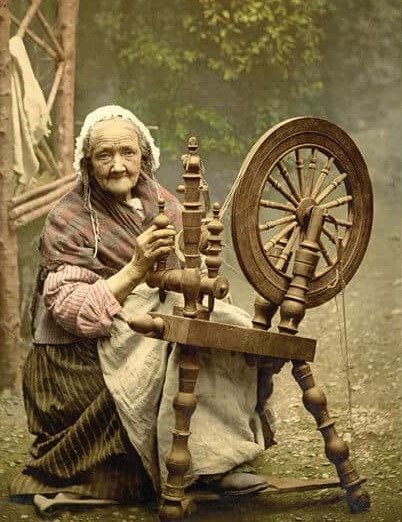
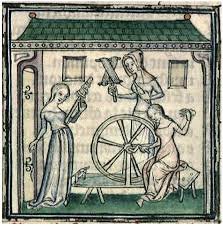
Spinning dates back thousands of years to ancient civilizations in the Indus Valley, Egypt, and Mesopotamia, when primitive humans used hand spindles and drop spindles to manually spin fibers. These simple spinning methods served as a springboard for the creation of more complex spinning tools, including the spinning wheel, which transformed the Middle Ages’ textile industry. With the development of motorized spinning apparatuses like the spinning jenny, the water frame, and ultimately the spinning mule during the Industrial Revolution, spinning continued to advance and resulted in the construction of spinning mills and the large-scale manufacturing of yarn.
Fundamentals of Spinning:
Spinning is essentially the process of twisting raw fibers, such as cotton, wool, silk, or synthetic materials, into continuous strands of yarn. Drafting, twisting, and winding are the three main concepts in spinning. The process of elongating and attenuating fiber strands under control to give yarn the correct thickness and consistency is called drafting. Twisting is the process of giving the drafted fibers twist, which gives the yarn strength and cohesiveness. In order to wind the twisted yarn onto a spool or bobbin for additional processing, winding makes sure that it is distributed evenly.
Different Spin Technique Types:
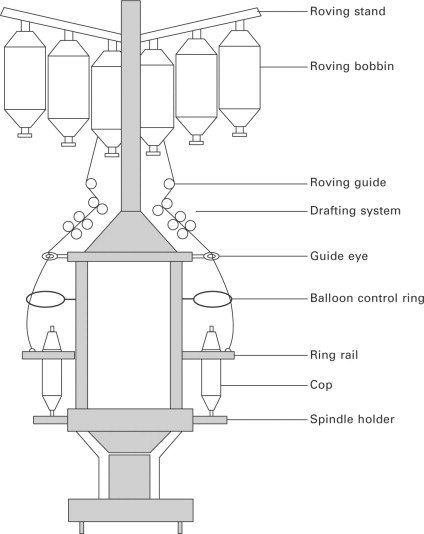
Ring spinning and open-end spinning are the two primary categories into which spinning techniques can be generally divided. The most widely used technique in contemporary textile production is ring spinning, which entails feeding fibers through a sequence of rollers and onto a revolving ring and traveler mechanism to add twist to the yarn. A distinct method is used in open-end spinning, sometimes referred to as rotor spinning, in which fibers are fed straight into a rapidly revolving rotor, which creates twist and makes the yarn. Regarding yarn quality, manufacturing efficiency, and compatibility for various fiber types, each spinning technique has pros and cons.
Innovations in Spinning Technology:
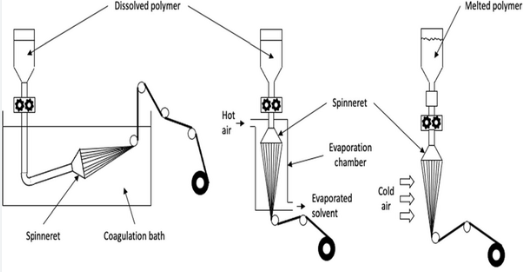
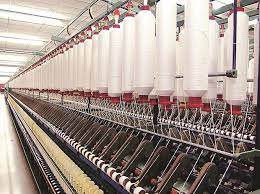
By enabling increased production rates, better yarn quality, and improved process control, innovations in spinning technology have completely transformed the textile industry. Many cutting-edge technologies are included in modern spinning machines, including computerized monitoring and optimization algorithms, automatic doffing systems, and electronic yarn tension control. Furthermore, new fiber blends and specialty yarns with advanced qualities like moisture management, antimicrobial resistance, and conductive capabilities have been introduced as a result of advancements in materials science, creating new opportunities for textile applications across a variety of industries.
Issues and Prospects:
Spinning still faces issues with sustainability, labor standards, and supply chain transparency in spite of its lengthy history and technological breakthroughs. The spinning industry continues to be concerned about the effects of spinning on the environment, especially with regard to energy use, water usage, and chemical emissions. To tackle these obstacles, a comprehensive strategy is needed, combining ethical and environmental behaviors with innovative technology. The use of renewable energy sources, the creation of biodegradable fibers, and the use of circular economy models. Which place an emphasis on waste reduction and resource efficiency could all be future developments in spinning.
In summary, spinning embodies the union of custom and invention, artistry and technology, in the age-old endeavor to turn unprocessed fibers into lovely and useful skeins. The art and science of spinning, from antiquated spinning wheels to cutting-edge spinning mills, continue to influence the global textile scene by promoting technological advancement, cultural expression, and economic growth. Spinning is an ageless craft that serves as a constant reminder of humanity’s persistent ambition to create, invent, and weave the fabric of civilization as we navigate the opportunities and difficulties of the twenty-first century.
Keywords: Spinning, textile technology, yarn production, historical evolution, modern innovations